There’s one part of Korean history you can’t really skip over.
The Korean War. 1950.
It isn’t just something that happened decades ago. Technically, it never fully ended. There was a ceasefire, but no peace treaty. South and North Korea are still separated by an armistice line. That unfinished feeling is part of the country’s reality even today.
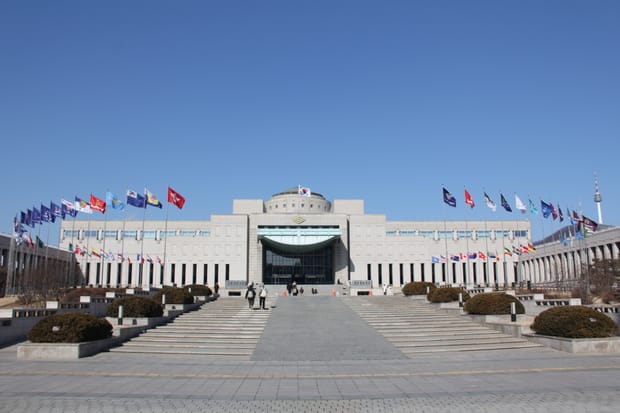
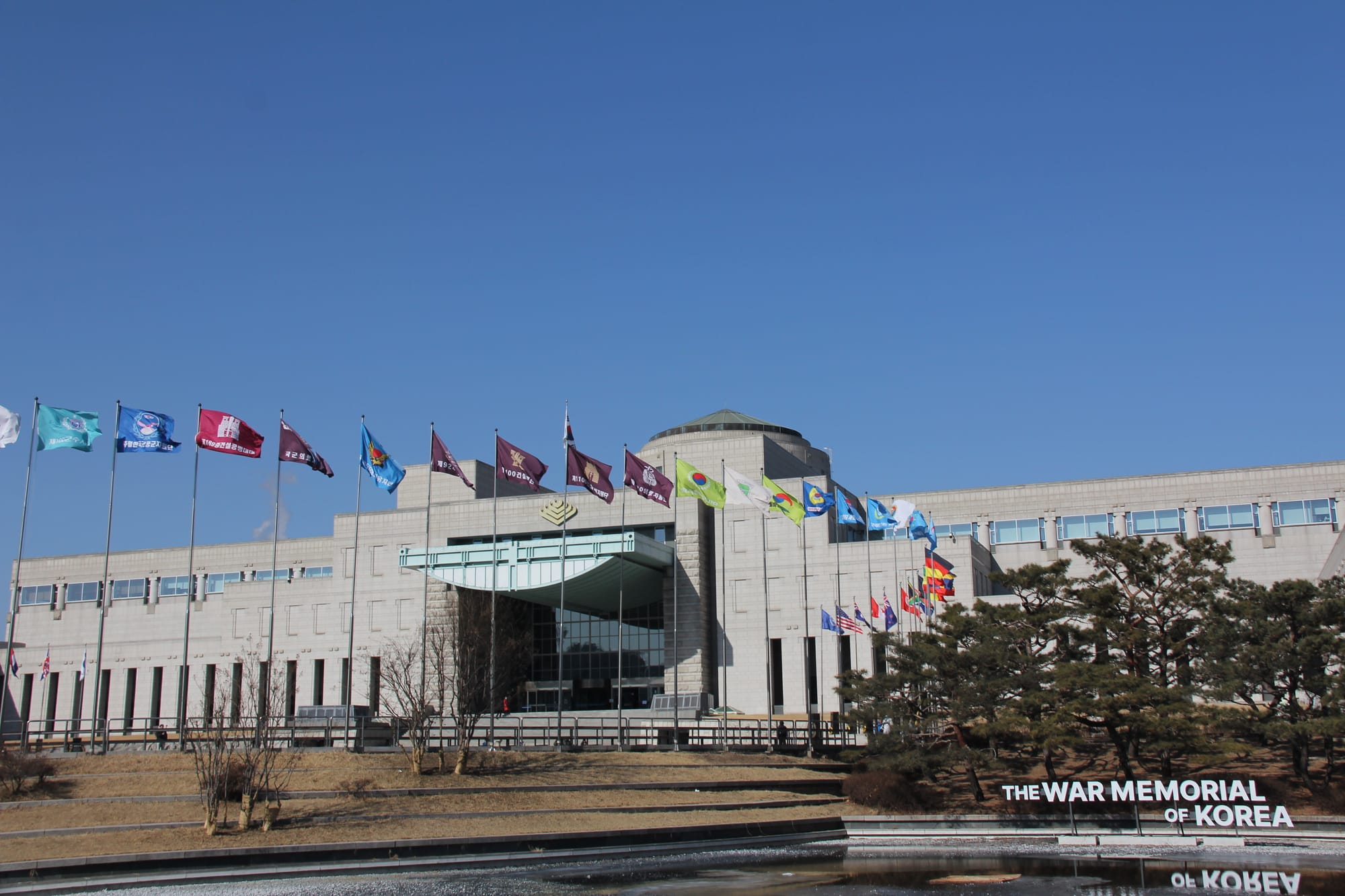
The War Memorial of Korea holds that story — the records, the names, the memories, and the weight of what was lost.
The Outdoor Exhibition — Facing the Traces of War
When you arrive, the first thing you notice isn’t a specific exhibit. It’s the scale.
The wide open plaza. The tall memorial structures rising into the sky. The kind of space that makes you slow down without being told to.
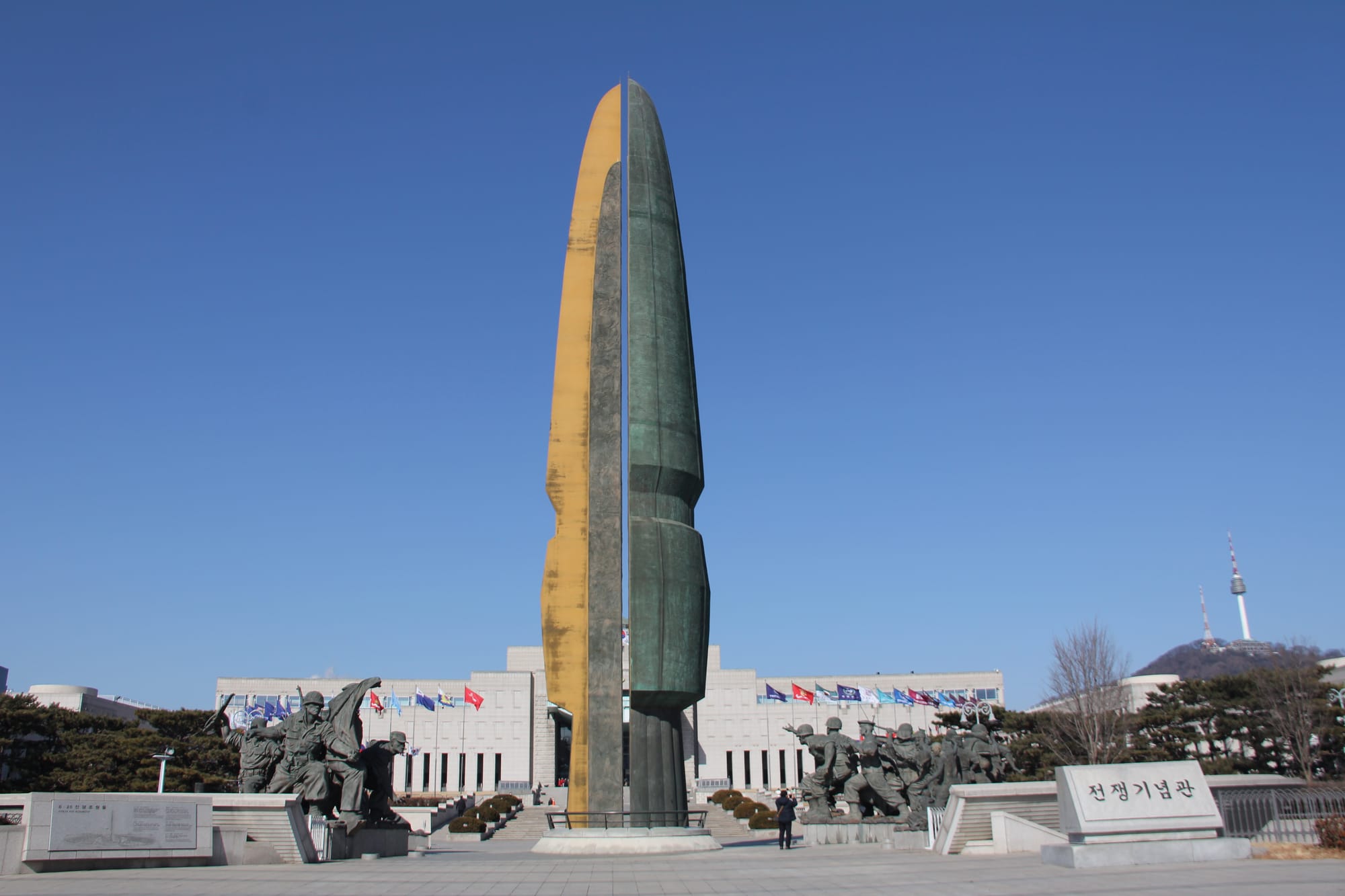
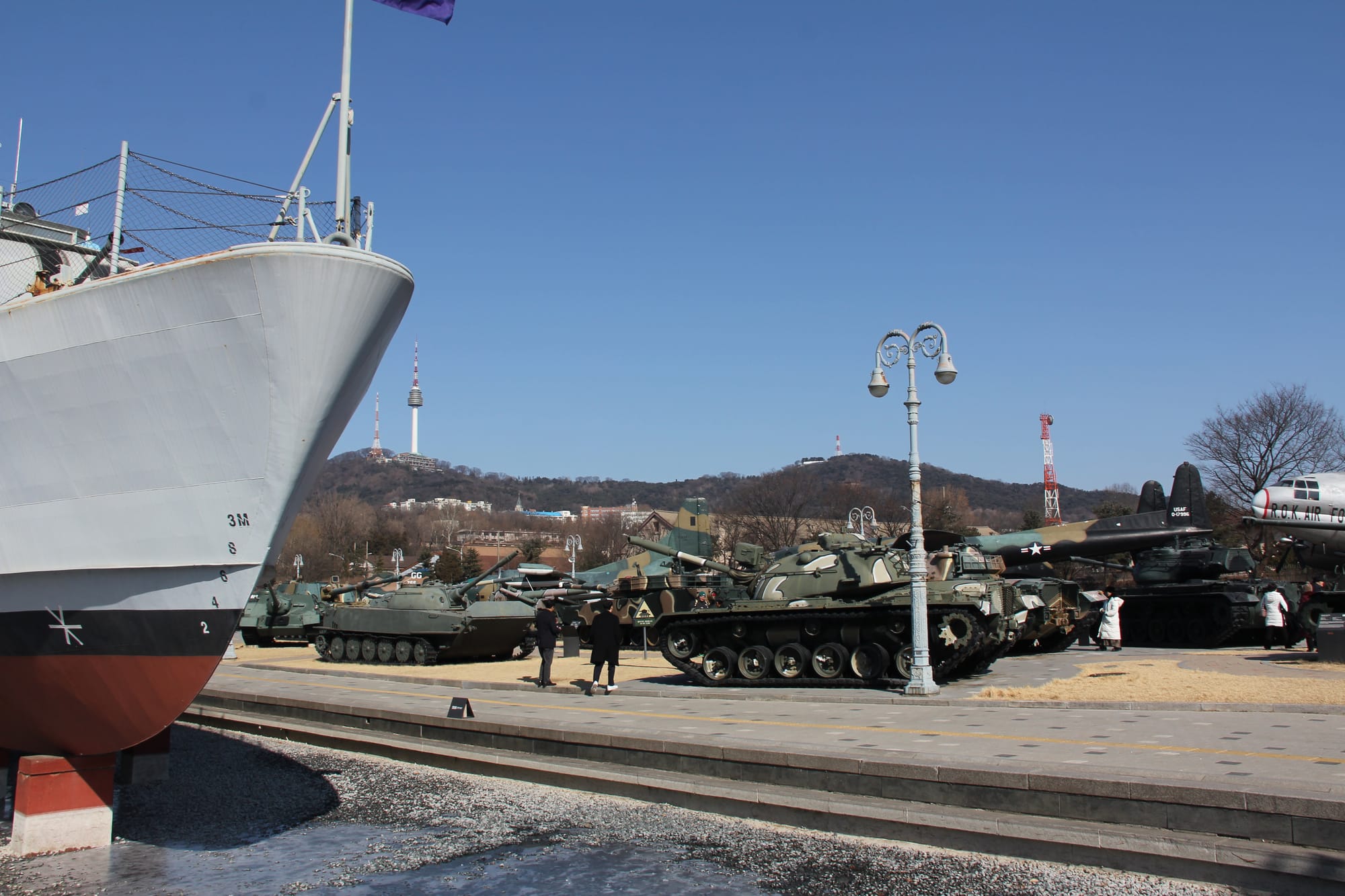
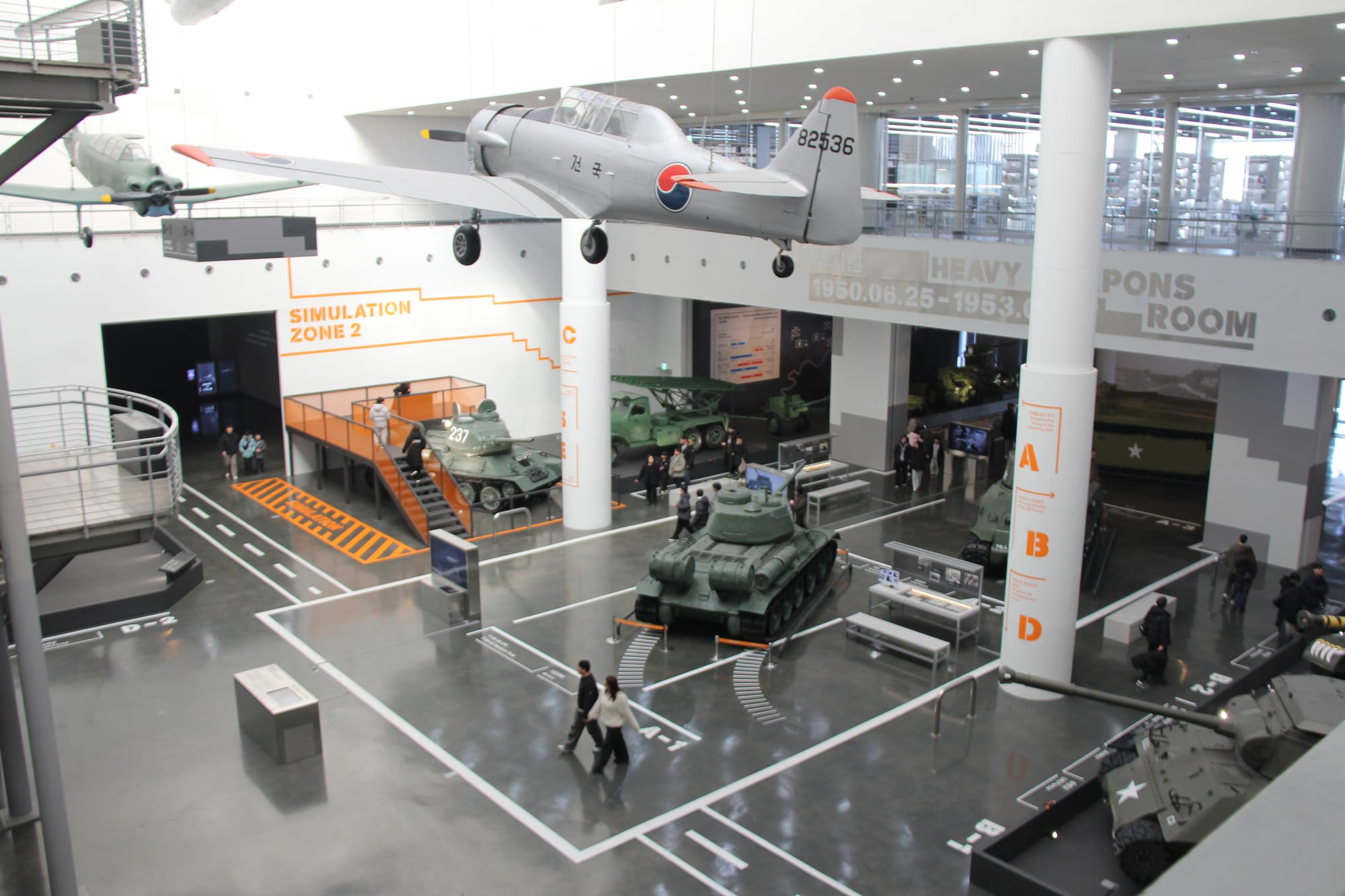
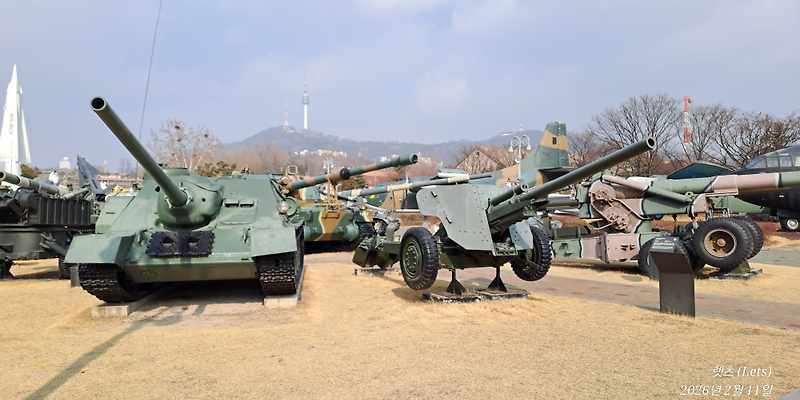
Off to one side, there’s the outdoor exhibition area. Fighter jets, tanks, naval vessels, artillery. Real equipment that was once used in battle. Some of them you can step inside. Many of them you can touch.
When you put your hand against the cold metal, it doesn’t feel like a museum piece. It feels heavy. These weren’t models built for display — they were part of something that determined who lived and who didn’t.
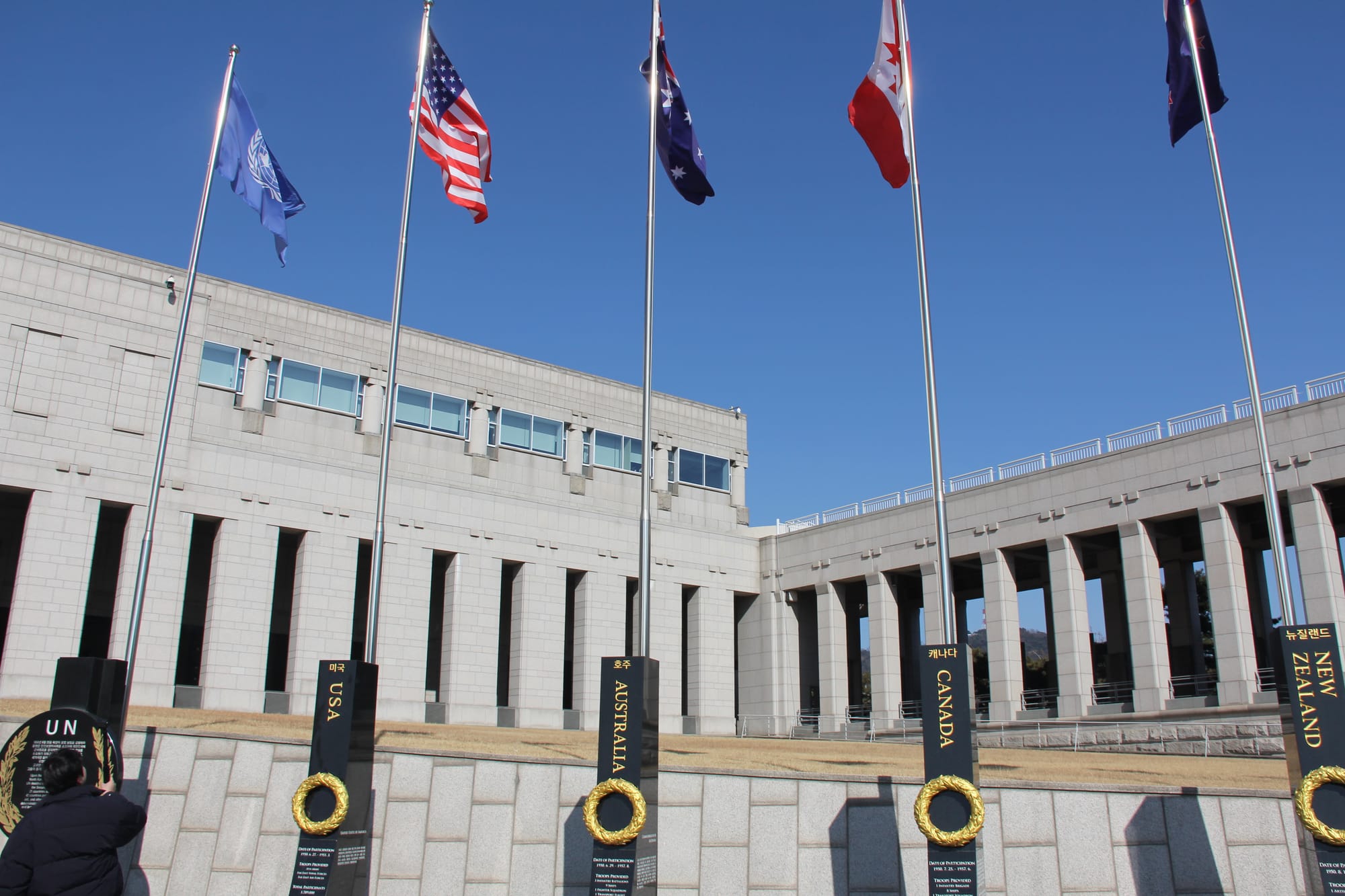
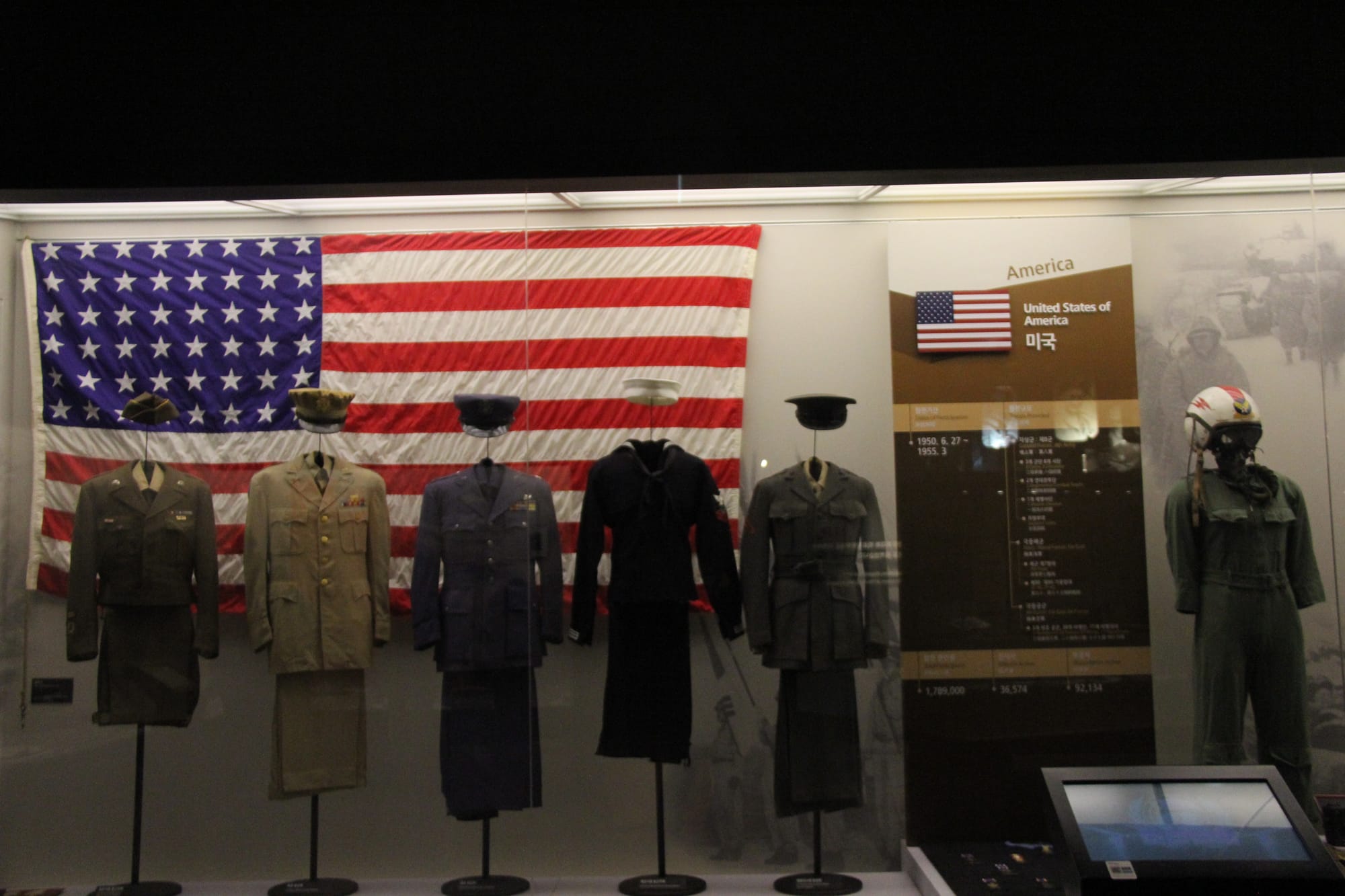
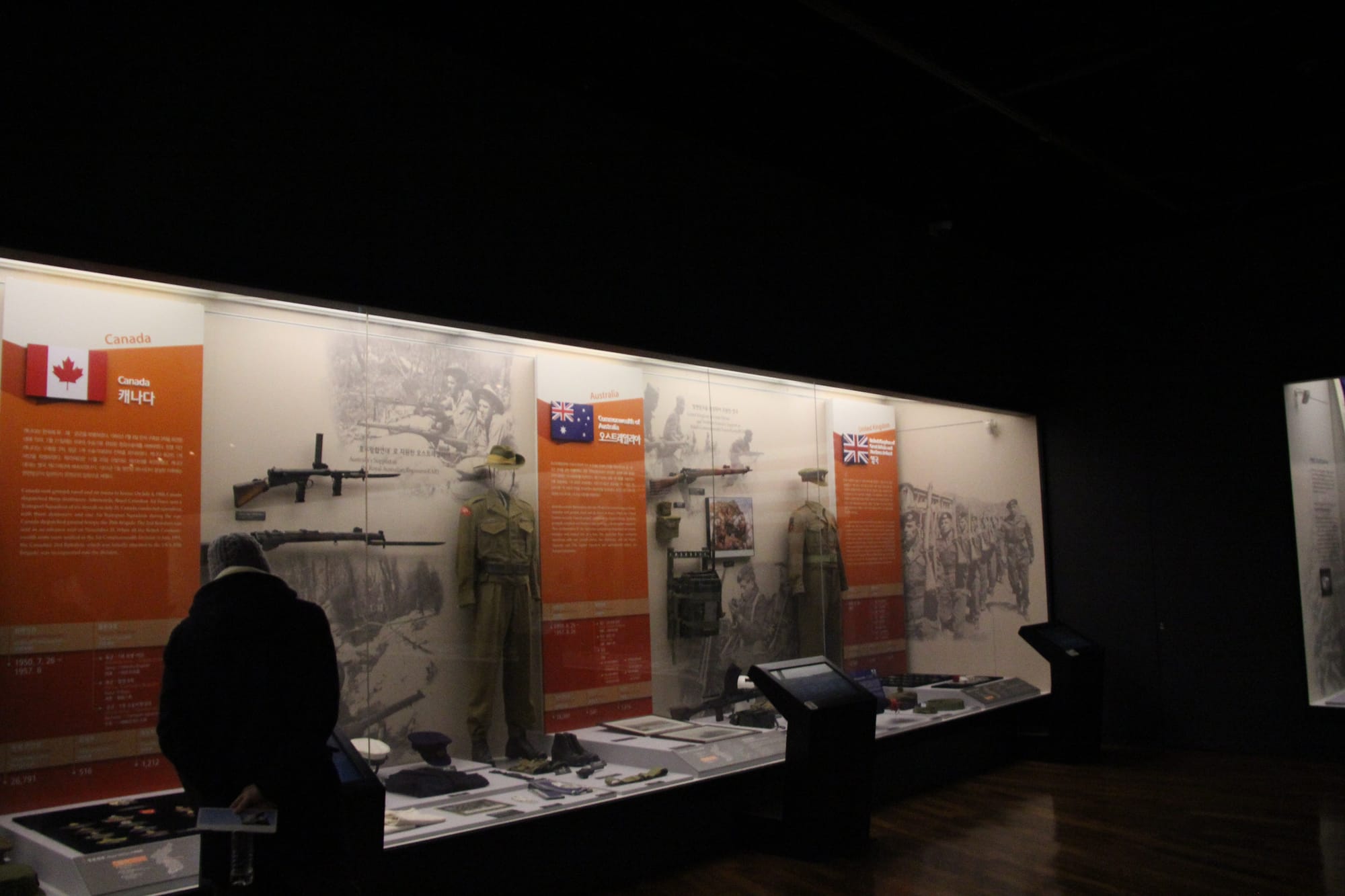
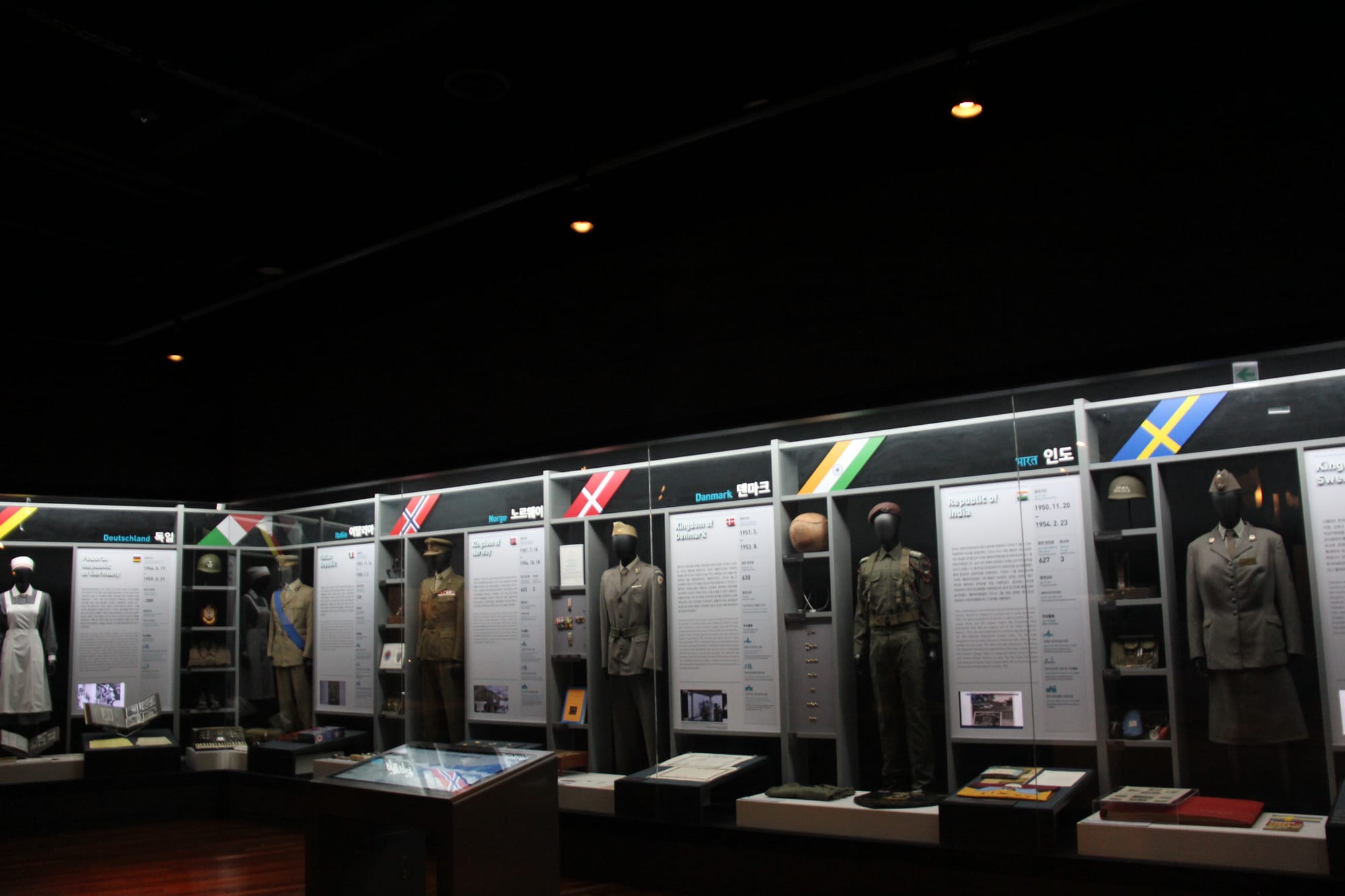
Across the plaza, you’ll see rows of national flags. These belong to the countries that fought alongside South Korea during the war. The memorial doesn’t only remember Korean soldiers; it quietly acknowledges the international forces who stood here, too. It feels less like a political statement and more like a gesture of remembrance and gratitude.
The Indoor Galleries — A Space of Memory and Remembrance
Step inside, and the mood shifts.
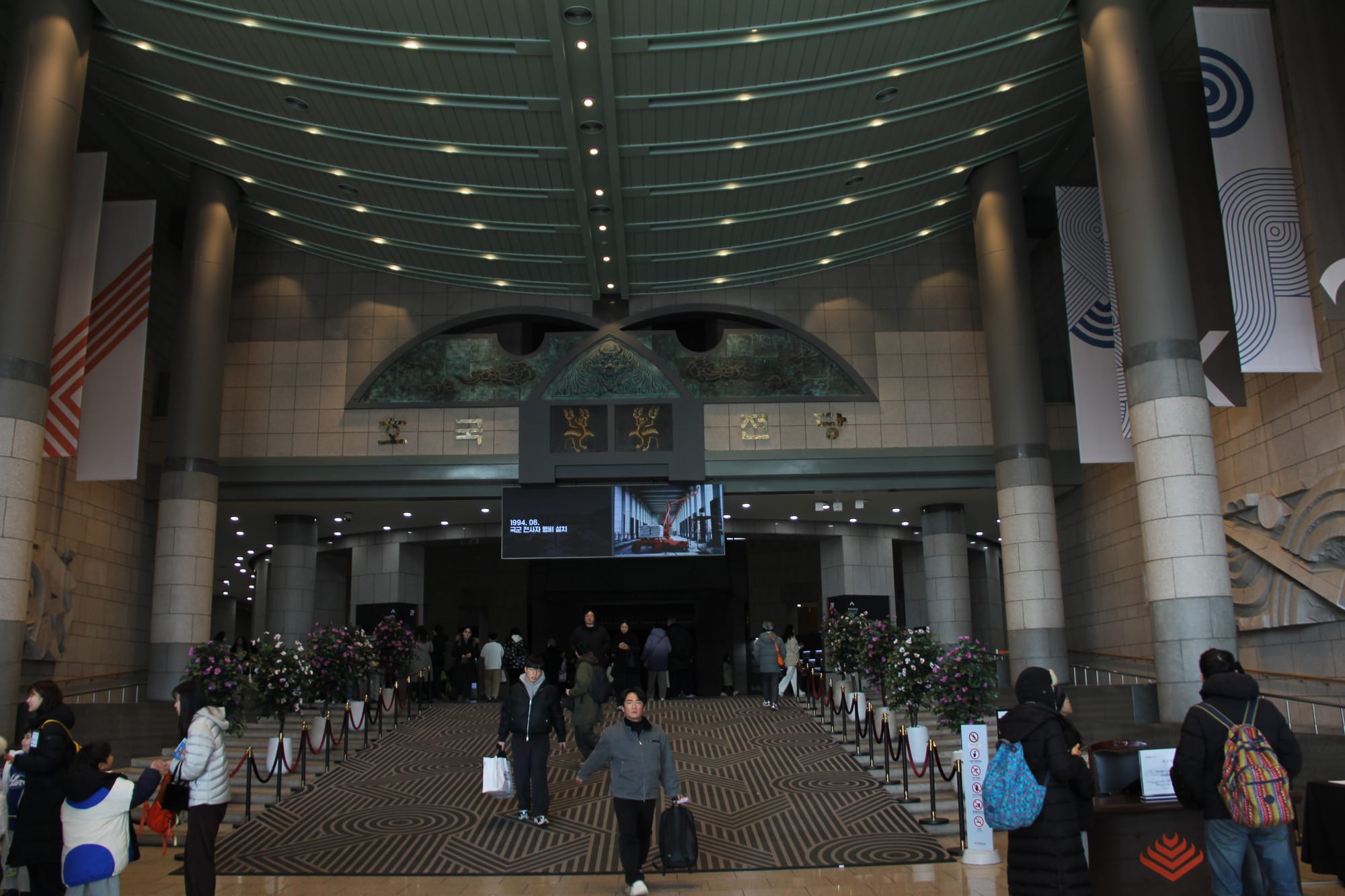
It’s large, but quiet. Not because anyone enforces silence — it just happens naturally. Visitors move slower. Conversations soften. No one laughs loudly. It’s as if everyone instinctively understands where they are.
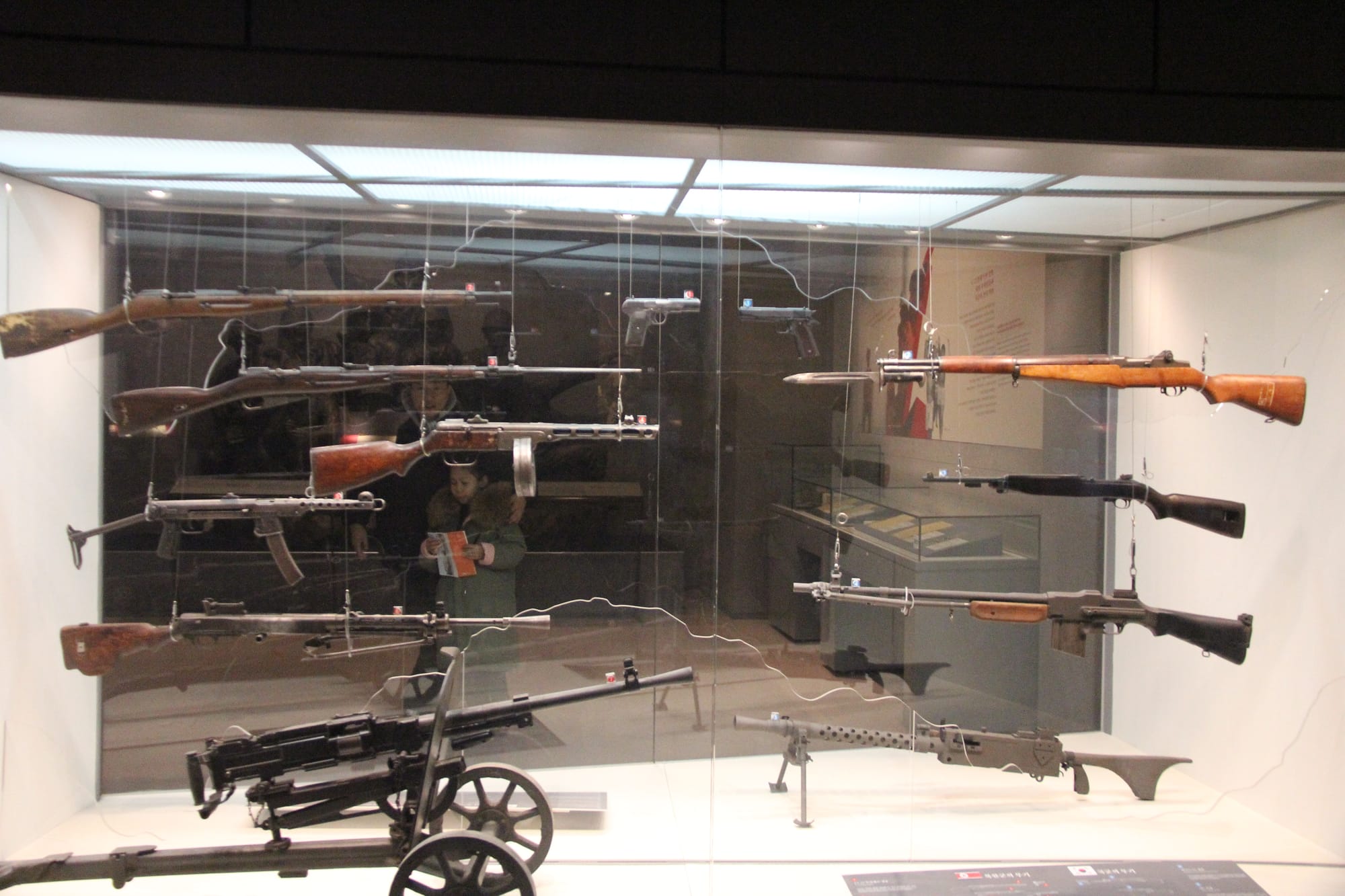
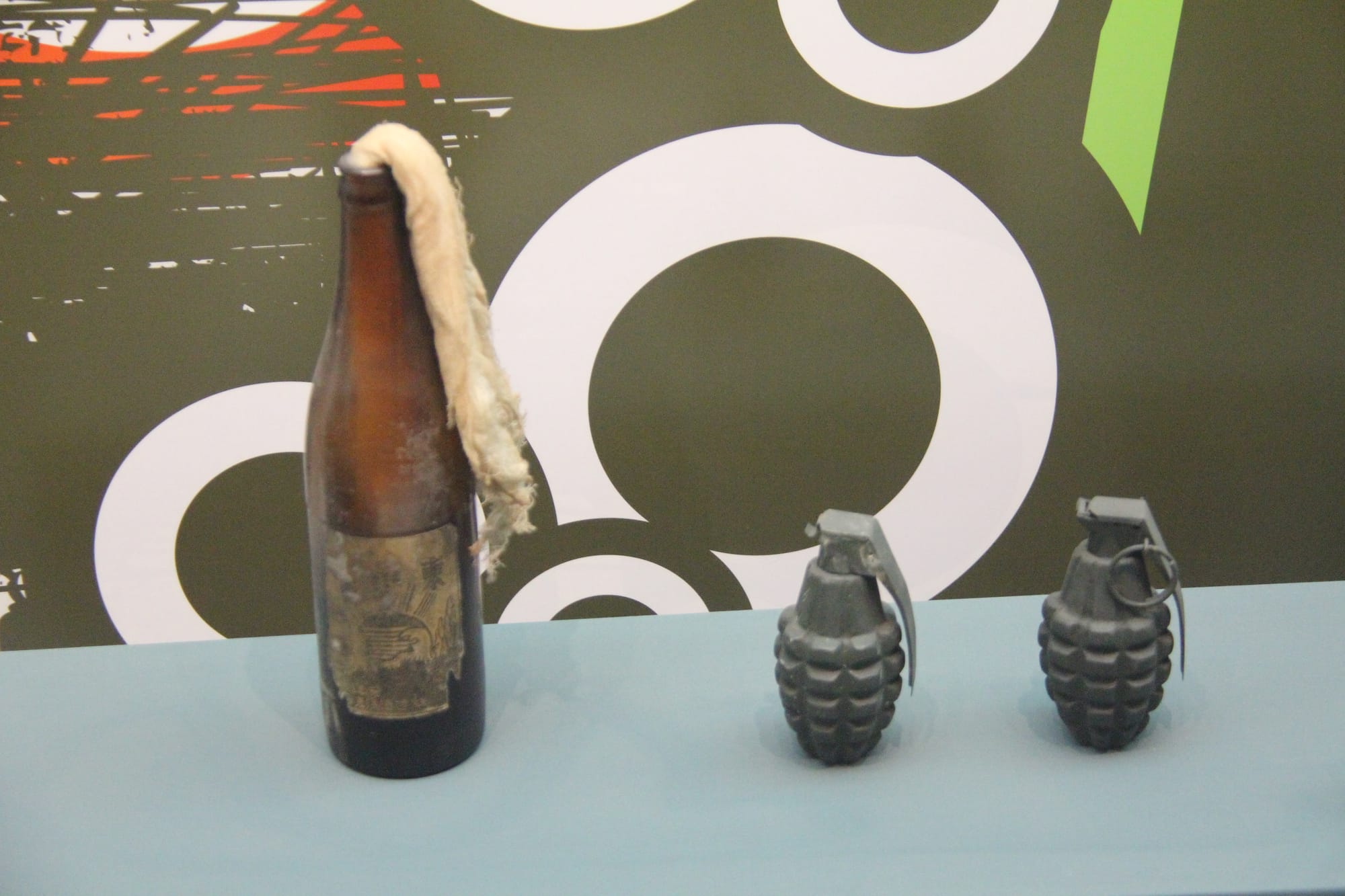
Inside, you’ll see the weapons used during the war — rifles, grenades, equipment — and the uniforms worn by soldiers at the time.
There are detailed models showing moments from the battlefield. Exhibits show scenes from negotiations, including the involvement of the United Nations and Chinese forces during the armistice talks.
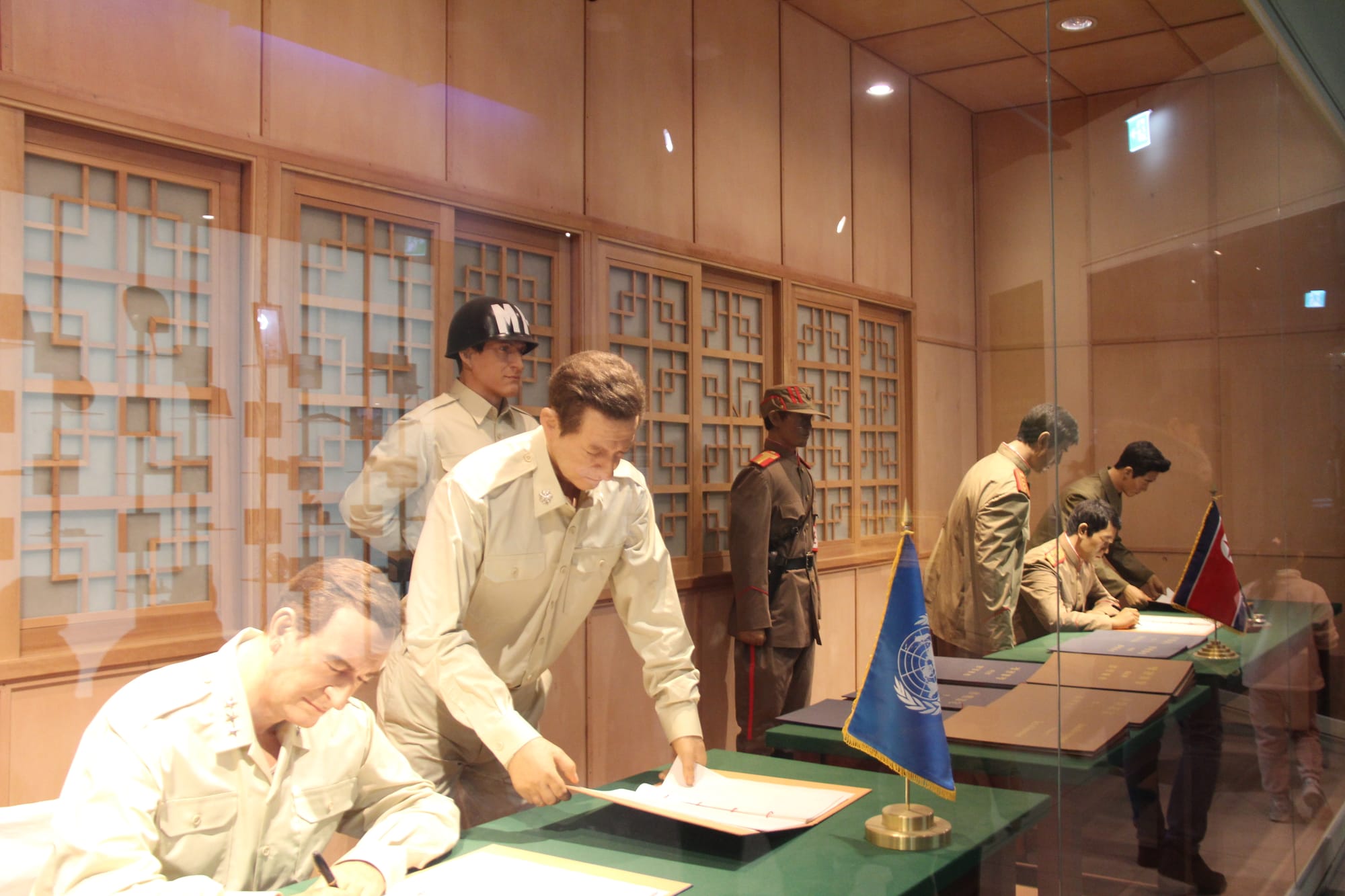
There are video archives, documents, and a library filled with records from that period.
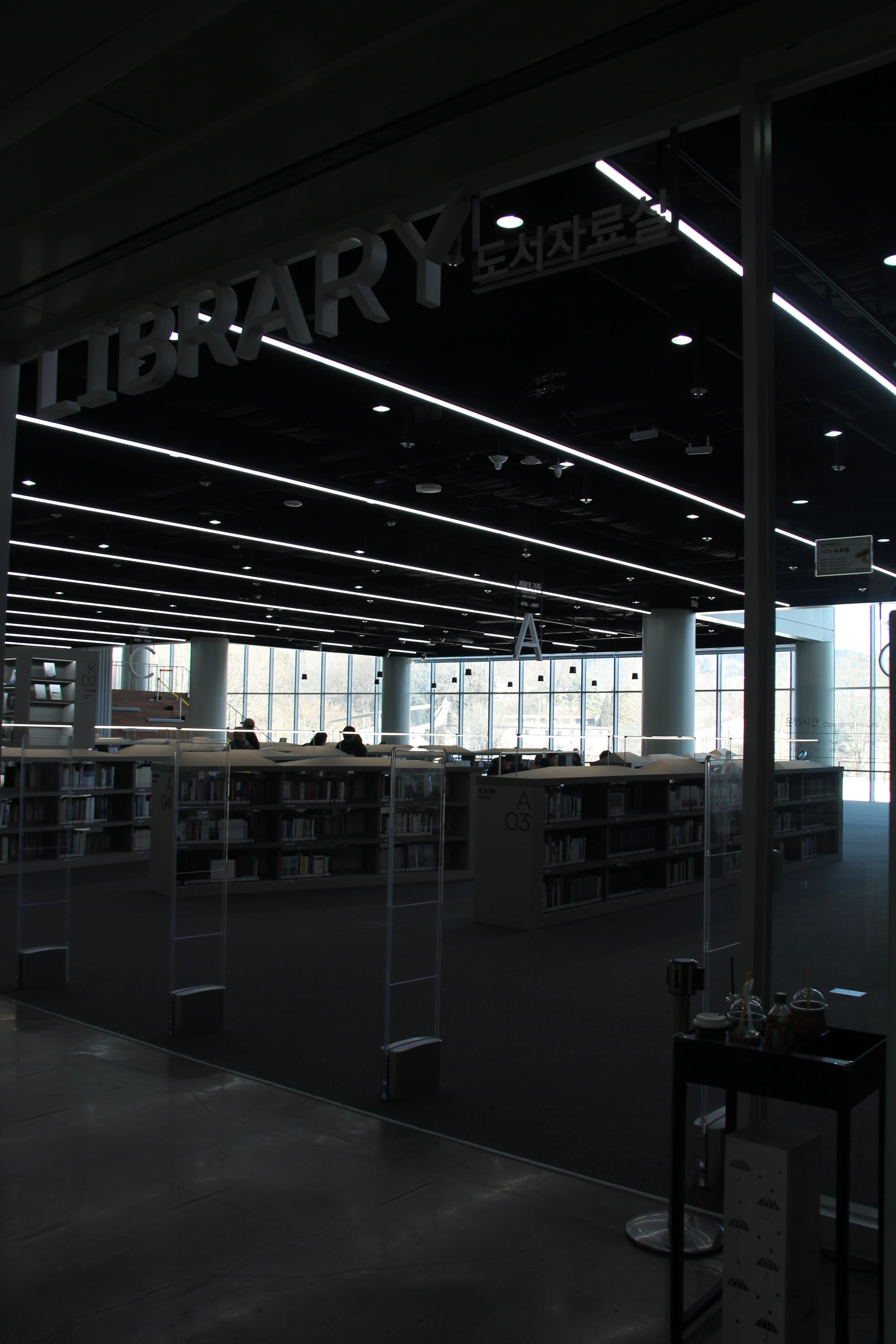
It’s not overwhelming in a dramatic way. It’s heavy in a quiet way. The kind that lingers.
It’s a painful history. But it’s presented in a way that simply asks you to look — and to remember.
Syn-K Takeaway
Korea is still technically at war.
That armistice line isn’t just a sentence in a textbook. For South Korean men, mandatory military service — usually around two years — is still part of life. If you visit the memorial, you might notice young soldiers walking through the exhibits during their short leave.
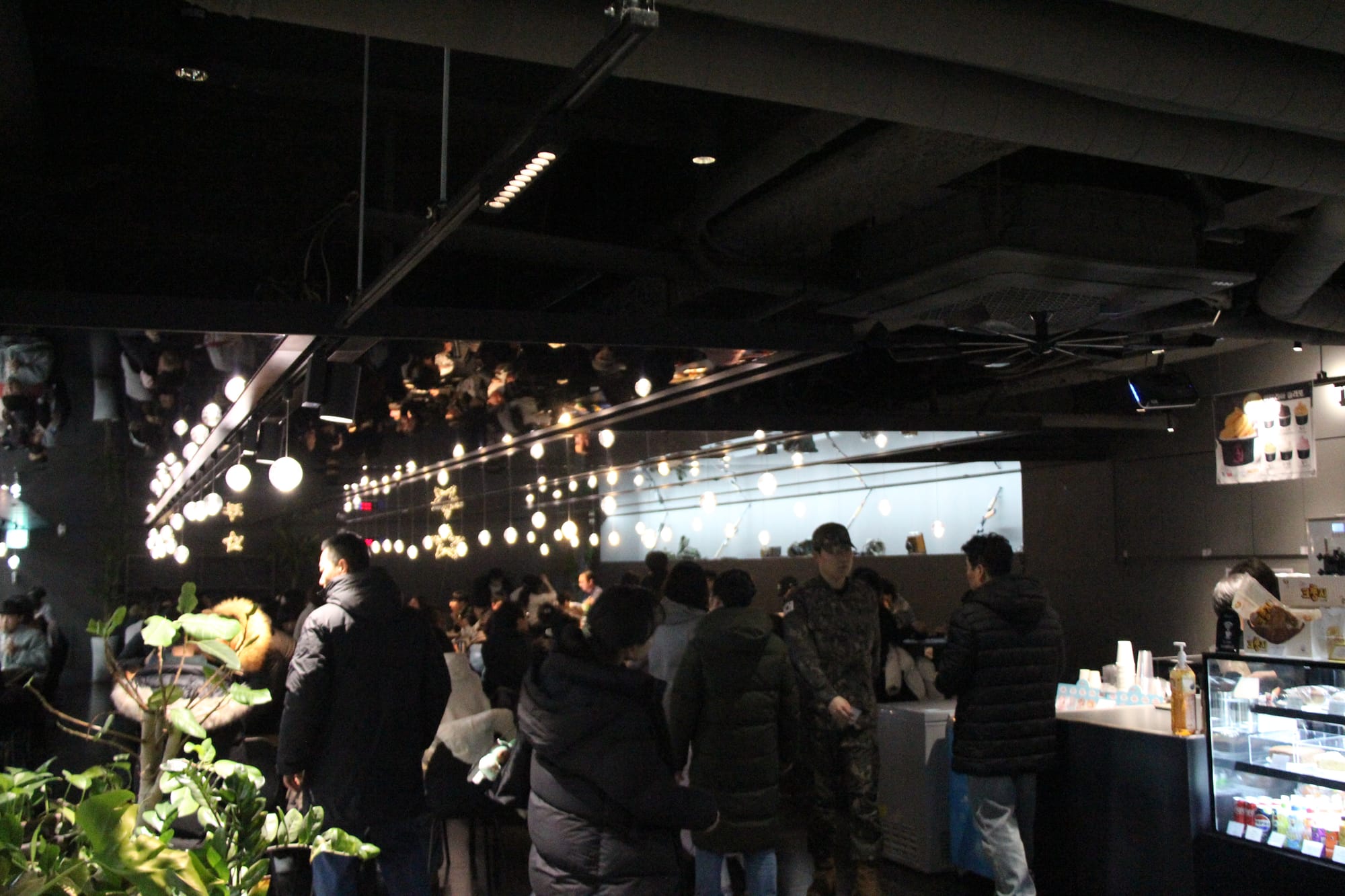
For many Koreans, the Korean War isn’t distant history. It’s something that still shapes the present.
If you’re traveling in Korea, this isn’t the most entertaining stop on your itinerary. But it might be one of the most important.
It’s one of those places that doesn’t just tell you about a country — it helps you understand it.
Address:
29, Itaewon-ro, Yongsan-gu, Seoul, Republic of Korea.
Neighborhood / Station:
Samgakji Station /Sinyongsan Station

Related Post
 Hayne S.