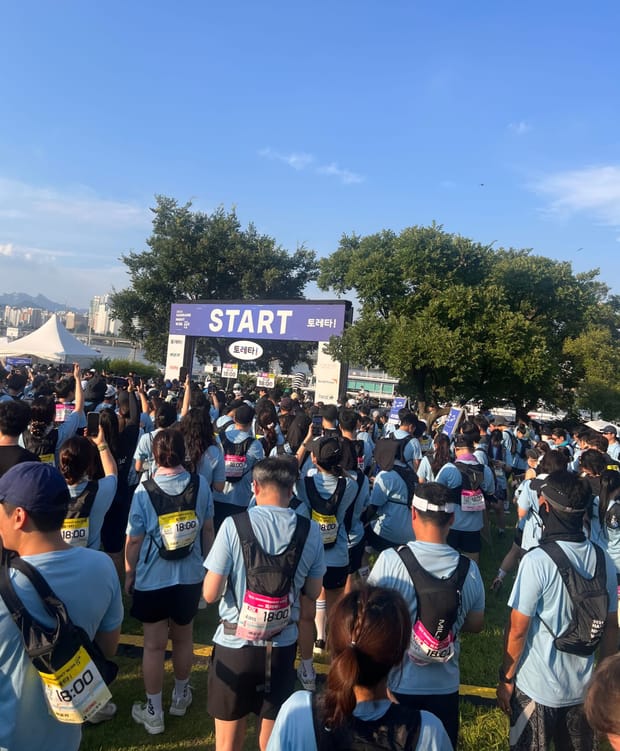
Five years ago, registering for a marathon in Korea was rarely urgent.
You checked the date. You registered sometime that week. Sometimes later.
In 2025, I ran close to ten races. Not one of them stayed open long.
For the larger events, registration closed in under a minute. For smaller, first-year races, slots were gone before people even finished reading the course description.
That contrast—how quickly this flipped—is what makes the current running boom worth examining.
When Running Stopped Being a Background Sport
Korean running culture used to feel narrow.
Older marathoners. A few club runners. Mostly solo training.
You rarely saw groups moving together unless it was race day.
Now, weekday mornings along the river feel scheduled. You start recognizing faces. Night runs look organized even when they aren’t. At races, half the crowd seems new—first marathon, first half, first bib.
This wasn’t a slow expansion. Participation jumped generations in a short window.
Why Marathon Registrations Now Sell Out in Seconds
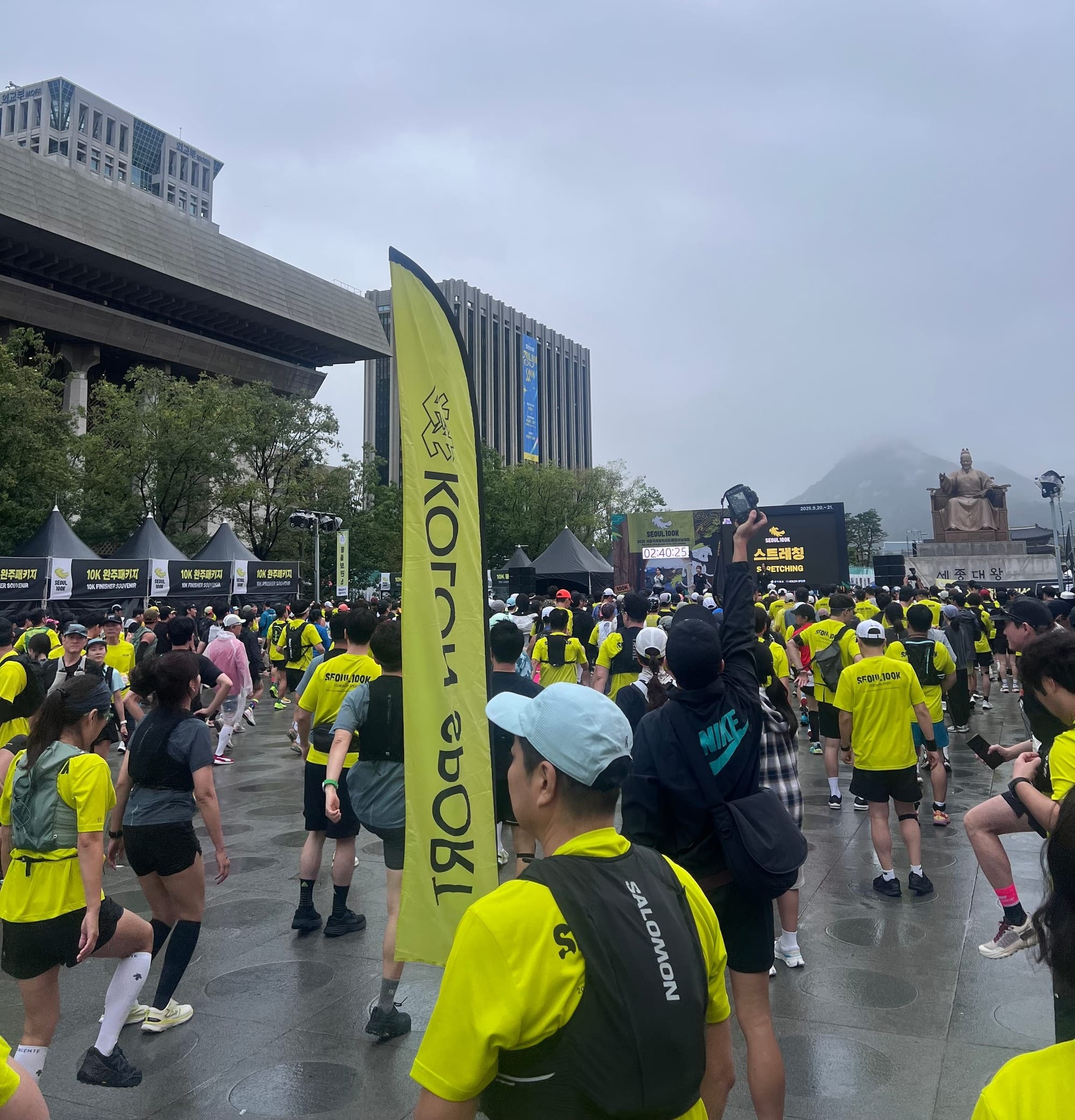
From the runner side, the urgency is practical.
Most races cap entries tightly due to permits and course control. When demand rises even slightly, scarcity becomes visible immediately. People who missed one race don’t wait next time.
But there’s another reason: races have become planning tools.
When I signed up for spring races last year, training wasn’t the hard part. The hard part was committing early enough to secure a spot. Once registered, everything else fell into place—sleep, weekends, mileage.
For many runners, the race isn’t the goal. It’s the constraint that makes consistency possible.
Why Running Works in Korea Right Now

Running fits into Korean cities unusually well.
Dense paths. Well-lit rivers. Predictable weather windows. Public transport that gets you to a start line without a car.
But culturally, it fits for a different reason.
Running gives effort a clear boundary. You start. You suffer. You finish. No ambiguity. No evaluation beyond the clock and the distance.
In a work culture where effort often spills past visible results, that clarity matters more than motivation slogans ever could.
What Changed Around the Sport Itself
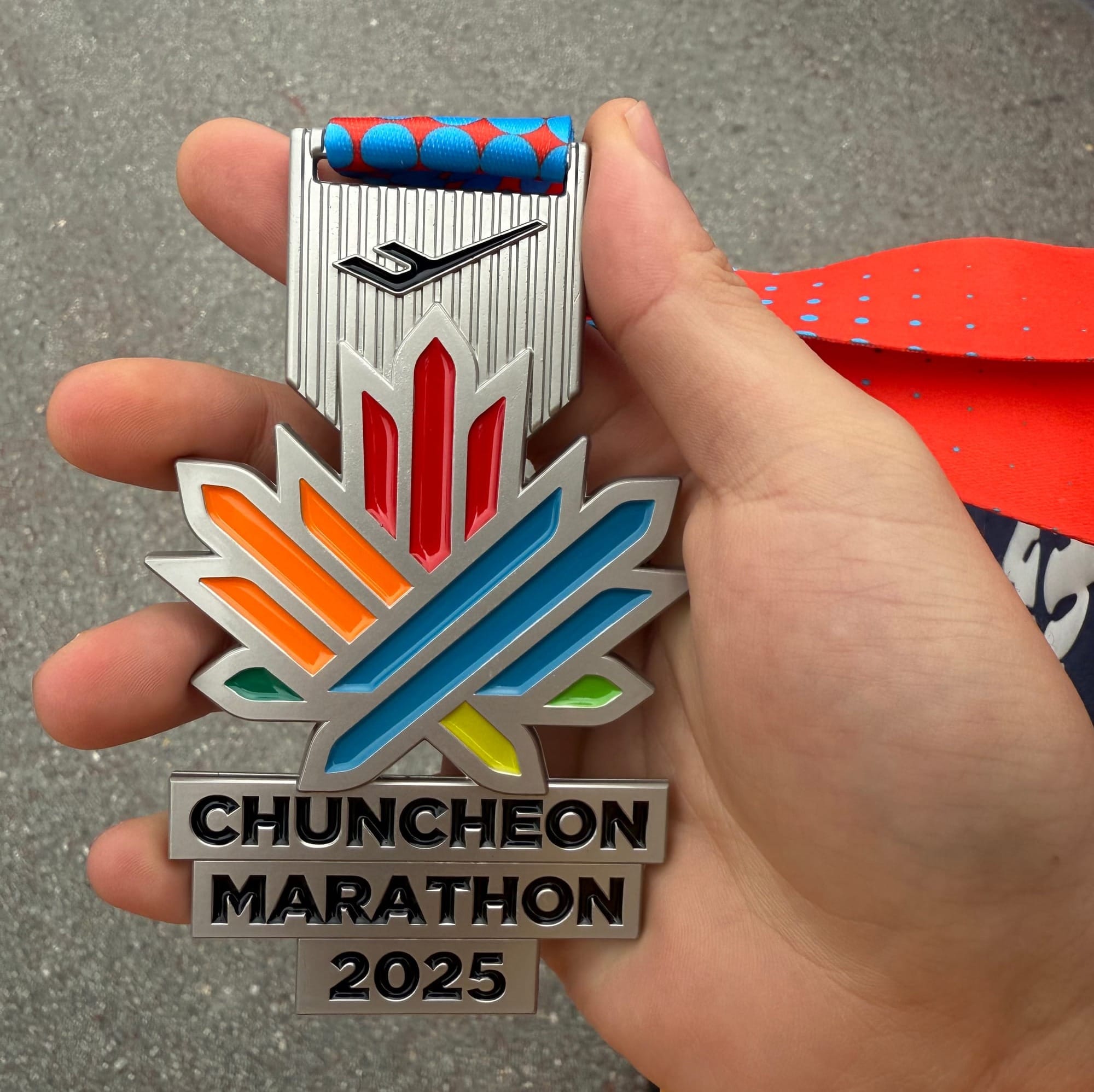
As participation grew, the environment adjusted.
Cafes near parks started opening earlier. Shoe releases began timing around race seasons. Running crews formed, then split by pace, distance, or schedule.
At races, finish lines stopped being quiet. Phones came out. Medals stayed on longer. People compared recovery plans instead of times.
The shift wasn’t toward performance. It was toward belonging.
Why This Boom Feels Structurally Different
Korea has cycled through fitness trends before—gyms, classes, boutique studios. Most required subscriptions, schedules, or instructors.
Running doesn’t.
You can train alone, but you’re never really isolated. Races, routes, and shared calendars connect runners without forcing interaction.
That makes the habit easier to keep—and harder to abandon.
The start lines are crowded now.
Not because everyone is chasing speed.
Because running finally found a way to fit real life—and stay there.
Syn-K Takeaway
In Korea, “going for a run” can accidentally turn into joining the city’s biggest unofficial club.
Bring shoes. Follow the river. If you end up pacing behind a stranger for 3 km, congrats—you’ve participated.
Related Post
 Hayne S.