

If you want to understand a city quickly, don’t start with palaces or museums.
Start at 8:10 a.m., near a subway exit, and watch the flow of office workers.
In Korea—more specifically, the Seoul metro area—there are a few places where the commute alone tells you the “world” you’re in. And three districts, in particular, feel like different universes even though they’re connected by the same transit card:
- Jongno (Jonggak–Gwanghwamun): legacy power, institutional gravity, big-company seriousness
- Yeouido: finance and politics making eye contact—suits, deadlines, and a sense of stagecraft
- Pangyo: an intentionally engineered tech cluster—hoodies, sprints, and a different relationship with time
Of course, these are archetypes. People are always more complex than neighborhoods, and every company has its own micro-culture.
But archetypes exist for a reason: cities compress patterns. And those patterns aren’t here to judge individuals—they’re here to help you read the air.
1) Why these three places feel so different: Korea’s “job geography”
Seoul isn’t a single business district. It’s layered.
- Jongno sits on the historical and administrative core. Power accumulated here for a long time, and the gravity never fully left.
- Yeouido became the modern hub of finance and politics, with institutions that shape the national conversation—money, policy, media.
- Pangyo, in contrast, is a deliberately built industry base. It’s outside Seoul proper (in Gyeonggi-do), designed to concentrate tech and R&D into one ecosystem.
That’s Step 1—the map view. Now let’s drop into street level.
2) Jongno: where the room’s rules matter more than personal style
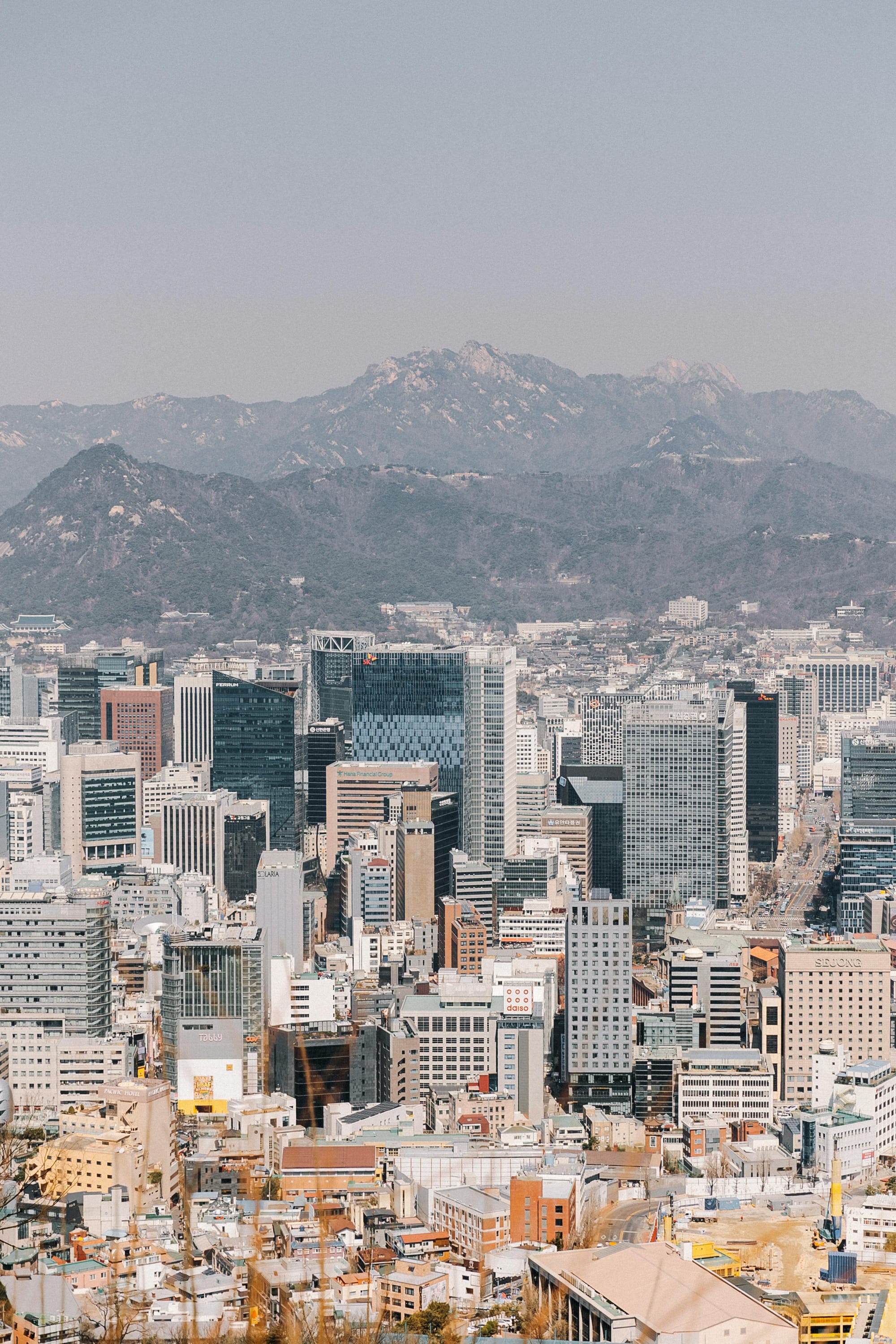
(Source: Photo by Elina Volkova on Pexels.)
The vibe
Jongno feels like Korea’s past isn’t locked inside museums—it’s embedded in the street grid.
Palaces, government buildings, and corporate towers share the same neighborhood logic. That proximity shapes behavior. People move like the city is quietly watching.
What you feel here isn’t “rudeness.” It’s formality.
You see it in the walking speed. In the elevator silence. In the way lunch lines organize themselves without discussion. There’s an understated sense in Jongno that the default mode is careful—not because people are scared, but because the environment rewards low-friction behavior.
Why it became like this
It’s the density of institutions.
When government, legacy organizations, and large corporate networks sit close together, the district develops a social code that prioritizes risk reduction:
- dress in a way that signals credibility
- speak cleanly
- don’t stand out too loudly
- don’t create friction
Even kindness here tends to arrive quietly—like someone holding a door without making it a moment.
The “Jongno uniform” (half joke, half field note)
Not a strict dress code. More like a shared instinct: “Be presentable, don’t be disruptive.”
- smart casual brands that feel “safe” (think polo shirts, classic American preppy, clean basics)
- less “statement sneakers,” more “formal hiding inside neutral”
- you’ll see fewer loud Jordans and more shoes that say “I’m not trying to be a character”
- headphones: not the full cinematic over-ear flex—regular AirPods are the sweet spot
The message isn’t “we’re strict.” It’s:
“No one’s going to police you, but don’t forget you’re one unit inside a big machine.”
3) Yeouido: finance theater—pressure managed in suits
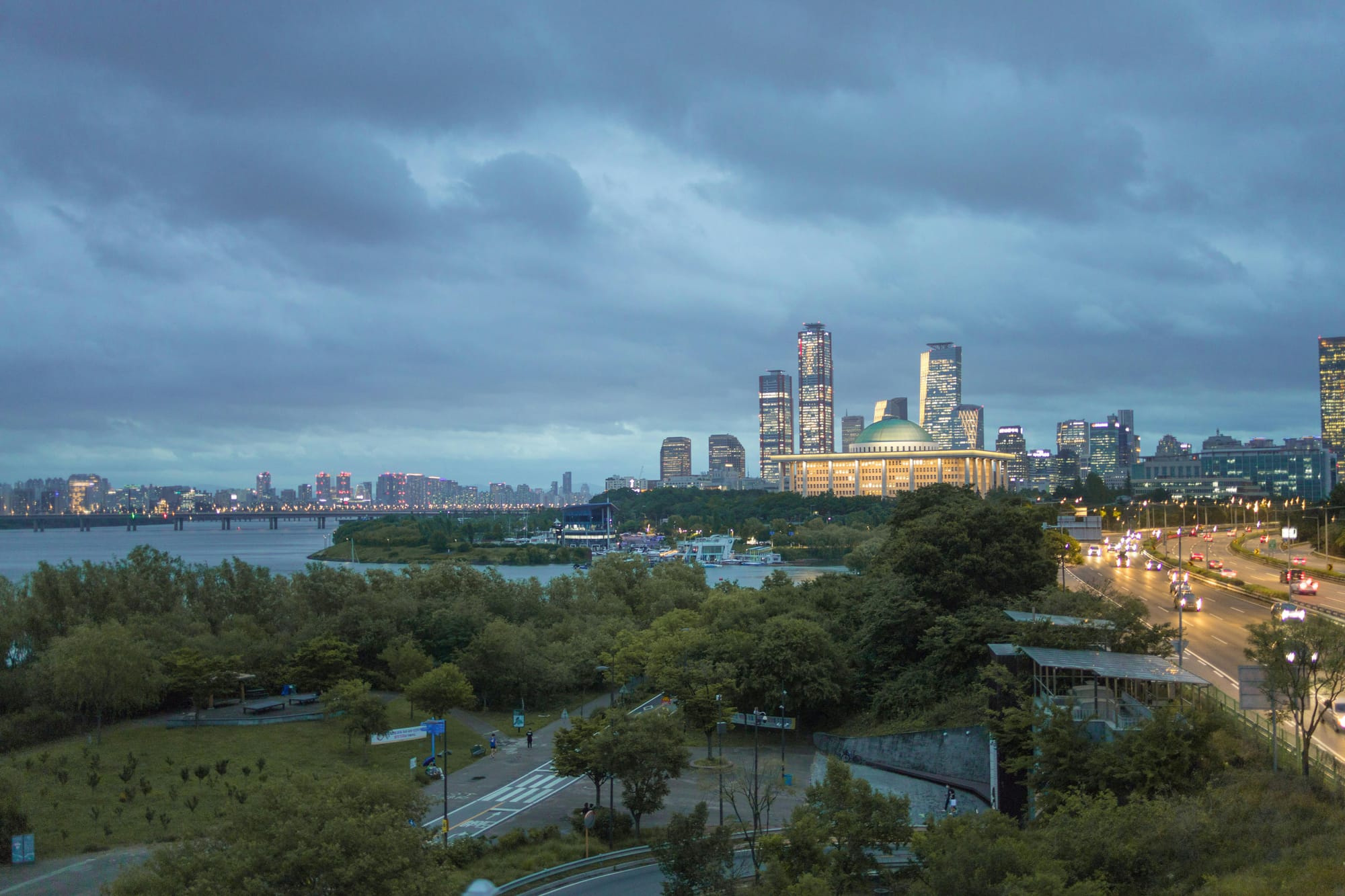
(Source: Photo by O-seop Sim on Pexels.)
The vibe
Yeouido feels like a district built for serious work—almost like a stage set designed for urgency.
Big buildings. Wide roads. Clean sidewalks. And faces that look like they have places to be, because they do. The entire neighborhood carries a kind of deadline weather.
Yeouido isn’t “financial” as a vibe; it’s financial because finance is physically here. Institutions cluster. Decision-making happens nearby. And with the political layer in the same vicinity, the district becomes a place where money and policy stay aware of each other.
Why it became like this
Two forces: clustering + symbolism.
Finance likes proximity. Banks, securities firms, exchanges, regulators, media, policy—when these operate within the same radius, the atmosphere changes. You get a district that feels permanently “client-ready.”
Yeouido also carries a certain “modern Korea” symbolism. That tends to shape how people present themselves: not only for rules, but for perception.
The “Yeouido uniform”
- dark-tone suits, sharp shirts
- coats that feel less like fashion and more like equipment
- hair and grooming that says: “I can walk into a meeting at any moment.”
The look isn’t always stricter because the rules are strict. It’s stricter because Yeouido work often involves performing trust.
Coffee culture: function over vibe
Yeouido coffee often feels less “cute” and more utilitarian.
Fast pickup. Reliable orders. Less lingering, more moving—because coffee is treated as a tool that keeps the day upright.
After-work
In finance districts worldwide, after-work can mean two things at once: decompression and networking. Yeouido has that too—plus a Korean layer:
- team cohesion
- hierarchy and nunchi (reading the room)
- the social signal of “we leave together”
In Yeouido, even the end of the day can be a kind of choreography.
4) Pangyo: engineered speed—casual outside, high-speed brain inside
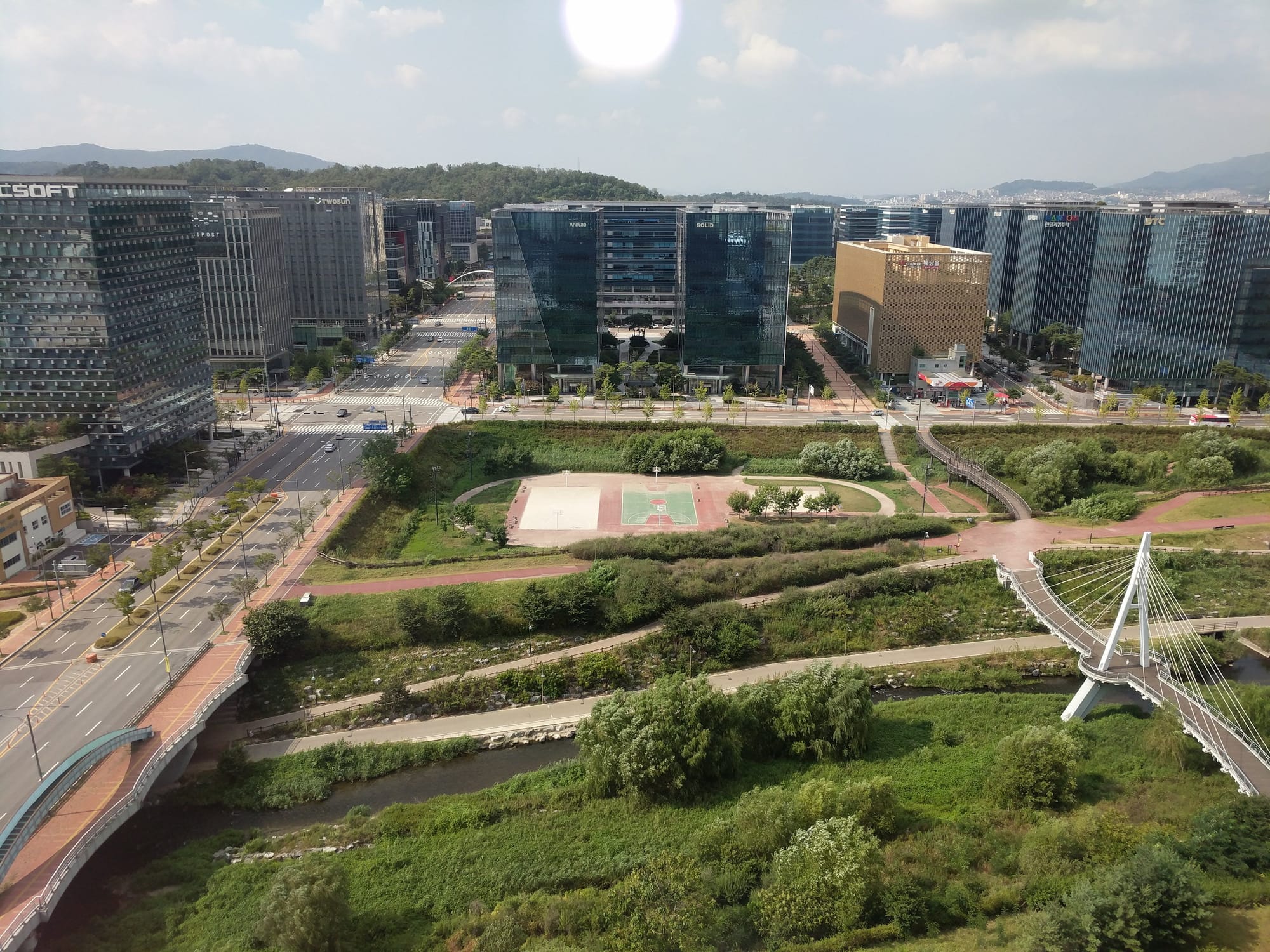
(Source: Wikimedia Commons — “Pangyo Techno Valley” by Imtotallykorean, CC BY-SA 4.0)
Pangyo isn’t a district that “happened.” It’s a tech cluster that was built.
That changes the feel immediately. It’s younger. Cleaner in a certain way. And the air is different: faster.
People often describe Pangyo culture as “free-spirited,” but a more accurate translation is this:
- meetings feel less ceremonial (less ritual, more function)
- titles still exist, but outcomes speak louder
- clothing is less about hierarchy and more about comfort for long thinking hours
Why it became like this
It’s the result of policy and industry choice.
When you design a zone for talent, capital, and companies to collide, you don’t just create offices—you create a tempo. Pangyo’s default rhythm belongs to builders:
Plans are nice, but execution wins.
Announcing is fine, but shipping matters.
Talking helps, but updating is the real language.
The “Pangyo uniform”
- hoodies, fleeces, backpacks
- sneakers built for walking without thinking
- employee badges worn like accessories
The message is simple:
“I’m solving something right now.”
Lunch culture: the hidden pressure point
Pangyo lunch can feel like an optimization game:
- eat fast, return fast (sprint mentality)
- popular spots mean queues
- “fast / good / affordable”—pick two
It creates that funny Pangyo contrast:
it looks relaxed, but it runs hot.
Casual clothing doesn’t mean low tension. Sometimes it’s the opposite.
Not because people are anti-social—because tech work can be mentally expensive. Pangyo’s warmth exists, but it’s often scheduled around recovery.
5) Korea changes fast—yet districts still leave fingerprints
Remote work, hybrid schedules, industry mobility, startups moving everywhere—these blur boundaries. And individuals vary wildly.
Still, districts matter because buildings, neighboring industries, and everyday routes train behavior.
You don’t have to believe stereotypes to enjoy patterns. You can treat them like weather: not “good or bad,” just something you can sense.
This isn’t a ranking. No “better.”
It’s simply this: Korea doesn’t have one office culture. It has multiple cultures coexisting, shaped by geography—and if you watch carefully, you can see them in clothing, lunch, and pace.
Syn-K takeaway
Tourist routes show surfaces.
Office districts show systems.
Same subway card. Same metro map.
Different worlds.


